

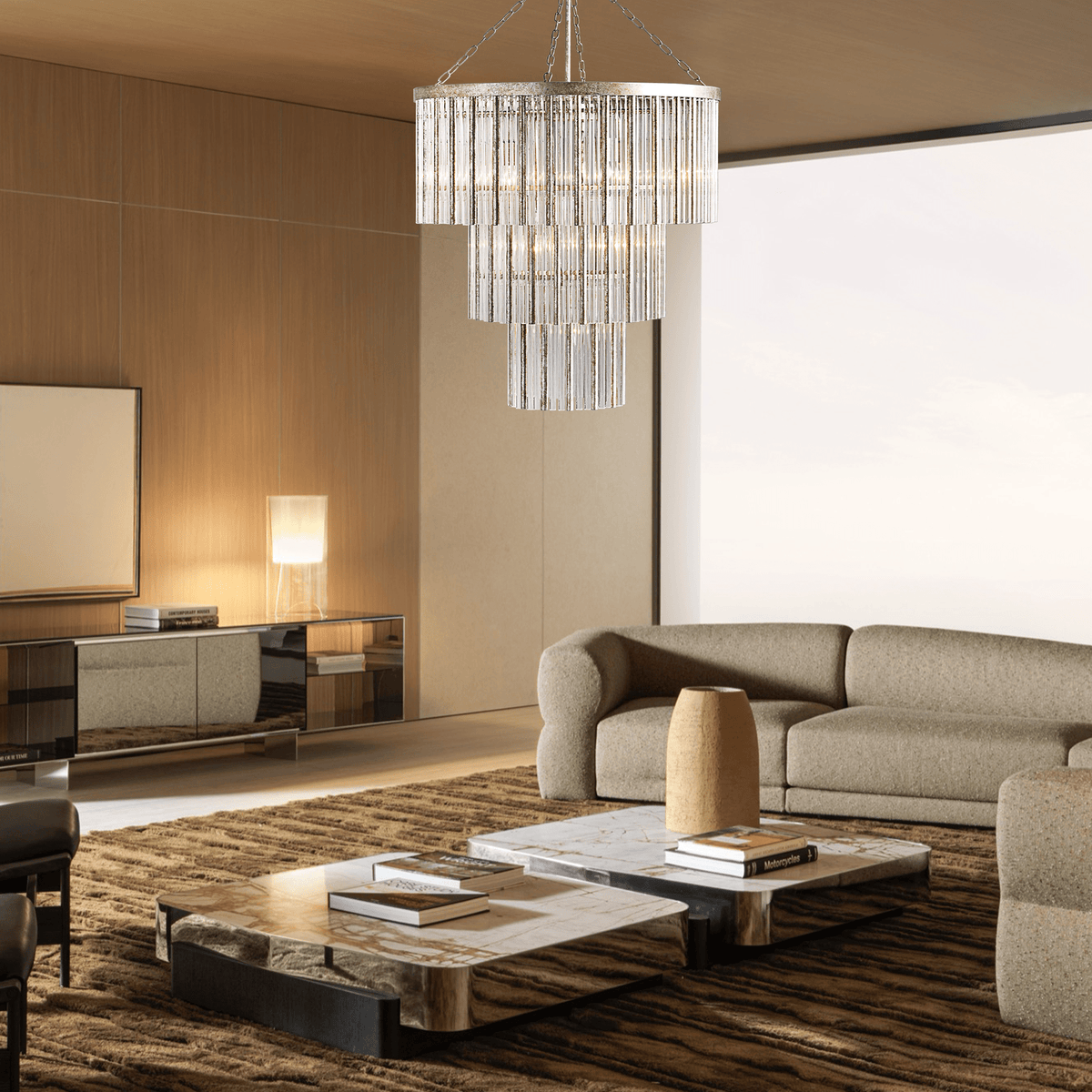
Lighting has the power to completely change the way a home feels. A well-designed room is not only about furniture, color, and decoration. It also depends on how light moves through the space, how it highlights materials, and how it creates atmosphere throughout the day.
Layered lighting is one of the most effective ways to make a home feel warmer, more refined, and more comfortable. Instead of relying on one ceiling light to illuminate the entire room, layered lighting combines different types of fixtures to create depth, balance, and flexibility.
What Is Layered Lighting?
Layered lighting means using several types of light in one space. Each layer has a different purpose.
Ambient lighting provides the overall brightness of the room. This may come from chandeliers, ceiling lights, flush mounts, or large pendant fixtures.
Task lighting supports specific activities, such as reading, cooking, working, or getting ready. Table lamps, wall sconces, kitchen island pendants, and vanity lights are common examples.
Accent lighting adds mood and visual interest. It can highlight artwork, architectural details, textured walls, or beautiful furniture pieces.
When these layers work together, the room feels more complete and intentional.
Start with a Strong Main Fixture
In many rooms, the chandelier or ceiling fixture becomes the foundation of the lighting design. It provides overall light while also setting the tone for the space.
In a dining room, a chandelier above the table helps define the area and creates a natural focal point. In a living room, a statement fixture can bring structure to the seating arrangement. In an entryway or staircase, a larger chandelier can create a memorable first impression.
The main fixture should match the scale of the room. A large space may need a wider or taller design, while a smaller space may look better with a cleaner and more delicate silhouette.
Add Wall Sconces for Depth
Wall sconces are a beautiful way to add warmth and dimension. They soften the room and prevent the lighting from feeling too flat.
In a hallway, sconces create rhythm and guide the eye through the space. In a bedroom, they can replace traditional bedside lamps for a cleaner look. In a bathroom, sconces placed beside a mirror provide flattering and balanced light.
Sconces are also useful in rooms where the ceiling light alone feels too harsh. By adding light at eye level, the space becomes softer and more inviting.
Use Pendants for Focused Areas
Pendant lights are ideal for spaces that need both function and style. Kitchen islands, breakfast counters, bedside corners, and small dining areas can all benefit from pendant lighting.
A row of pendant lights over a kitchen island can make the space feel organized and elegant. A single pendant beside a bed can create a modern, refined look. In an open-plan home, pendants can help separate one area from another without using walls.
The key is proportion. Pendants should feel connected to the furniture below them and should not block sightlines or make the space feel crowded.
Pay Attention to Warmth
The color of the light has a major effect on atmosphere. For most residential spaces, warm light feels more comfortable and elegant than cold white light.
Warm lighting works especially well in dining rooms, bedrooms, living rooms, and entryways. It enhances wood tones, brass finishes, marble surfaces, and soft fabrics. It also helps the room feel more relaxed in the evening.
For a high-end home, the goal is not only brightness. The goal is comfort, mood, and visual harmony.
Balance Beauty and Function
A beautiful fixture should also support daily life. Before choosing lighting, think about how the room is used.
A dining room may need soft, atmospheric light for meals. A kitchen needs brighter, more practical lighting for preparation. A bedroom should feel calm and relaxing. A bathroom needs clear and balanced light around the mirror.
The best lighting plan combines beauty with real function. It should make the room look better and make everyday moments easier.
Create a Consistent Style
Layered lighting does not mean every fixture has to match exactly. However, the pieces should feel connected.
You can repeat similar finishes, such as brass, bronze, black, or nickel. You can also connect the fixtures through shape, material, or design language. For example, a brass chandelier can pair beautifully with simple brass wall sconces, while a glass pendant can work well with a chandelier that also includes glass details.
A consistent lighting style makes the home feel more polished and thoughtfully designed.
Final Thoughts
Layered lighting is one of the simplest ways to make a home feel more luxurious. By combining chandeliers, pendants, wall sconces, and accent lights, you can create a space that feels warm, balanced, and beautifully finished.
The right lighting does more than brighten a room. It adds character, highlights the details you love, and creates an atmosphere that feels personal and refined.
At Gild Lamps, we design lighting for homes and projects that need both beauty and presence. Whether you are updating one room or planning a full interior project, layered lighting can help bring the entire space together.

